What to consider
A roof leak does not automatically mean you need a new roof, and a patch is not always the economical answer. The right choice depends on where the failure occurred, the condition of the surrounding materials, the roof's age and repair history, and whether the problem is isolated or part of a broader pattern.
For St. Catharines homeowners, the decision is often complicated by freeze-thaw cycling, wind from Lake Ontario, mature tree cover, and older housing stock with chimneys, additions, and multiple roof sections. A useful inspection should separate the immediate source of the problem from the condition of the roof as a whole.
When a targeted roof repair usually makes sense
Repair is generally the right starting point when the roofing system is otherwise performing well and the damage can be traced to one limited area. The repair should address the cause, not simply cover the visible symptom.
A sound repair may involve removing shingles around the affected area, correcting the flashing or underlayment below, and then reinstalling compatible materials. Surface caulking alone is rarely a durable answer when the actual water path is underneath the roof covering.
If the damage appears isolated, start with an assessment focused on finding the entry point and confirming the condition of the surrounding roof.
- A small number of shingles were lifted or lost during a wind event
- One piece of flashing has failed around a chimney, wall, skylight, or plumbing vent
- A leak is tied to a clearly defined penetration rather than widespread shingle deterioration
- The surrounding shingles remain flexible, secure, and in generally consistent condition
- The roof has not developed repeated leaks in different locations
- Matching replacement material is available and the repair can be integrated properly
When replacement deserves serious consideration
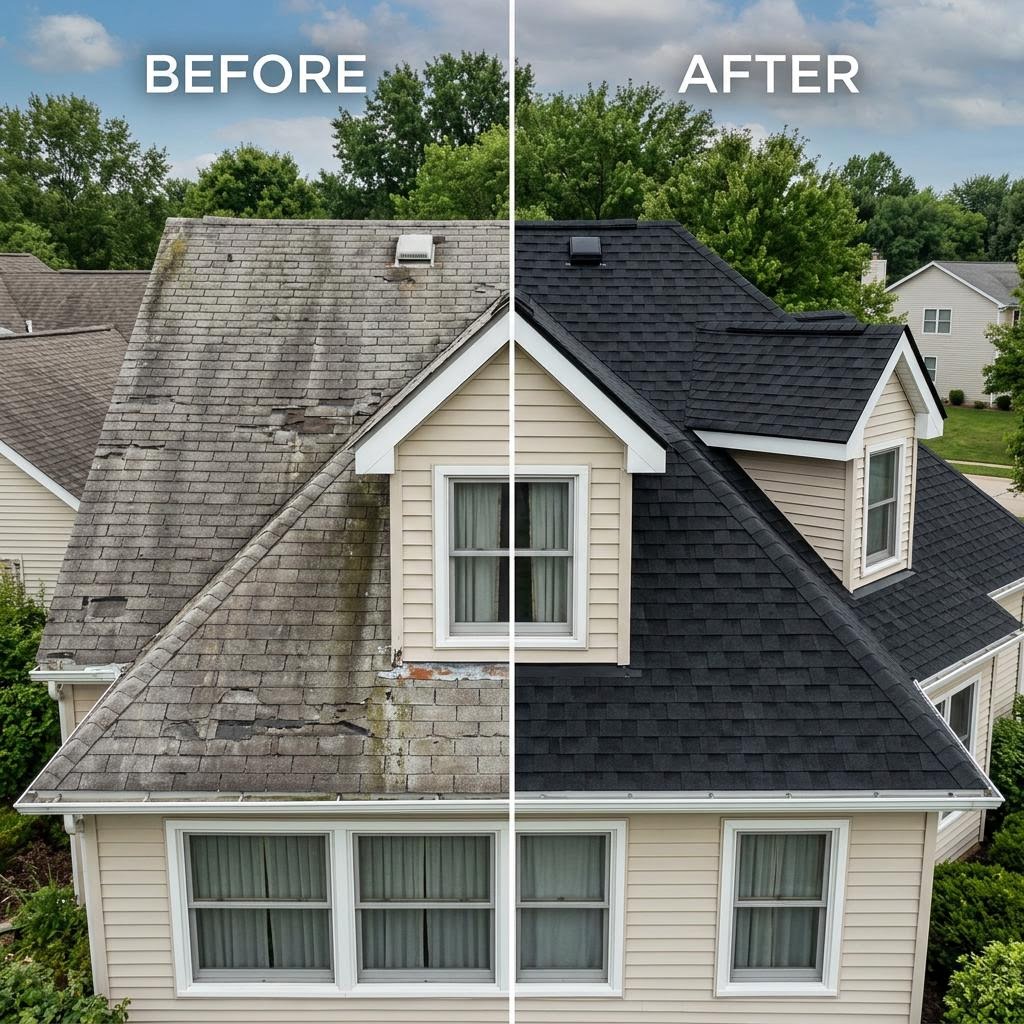
Replacement becomes more reasonable when the current problem is one sign of system-wide aging. In that situation, repairing one area may stop today's leak while leaving other vulnerable sections likely to fail soon.
Replacement also creates an opportunity to correct conditions beneath the shingles, including damaged decking, inadequate intake or exhaust ventilation, and incomplete ice-and-water protection. Those underlying details influence how the next roof performs through Niagara winters.
A complete replacement should solve the whole roof system rather than simply install new shingles over unresolved ventilation, flashing, or decking concerns.
- Curling, cracking, bald spots, or granule loss appear across multiple roof slopes
- Leaks have occurred in different locations or returned after earlier repairs
- Shingles are brittle enough that accessing one repair area damages nearby material
- The roof deck feels soft, appears uneven, or shows evidence of prolonged moisture exposure
- Several flashings, valleys, or penetrations need work at the same time
- The roof no longer sheds water consistently because of widespread material deterioration
Roof age is useful context, not the whole answer
Age helps frame the decision, but it should not be used by itself. Installation quality, attic ventilation, sun exposure, surrounding trees, storm history, roof pitch, and material type all affect how a roof ages. A newer roof with poor flashing can leak while the shingles still have useful life. An older roof with consistent wear may be dry today but too fragile for a dependable repair.
If you do not know when the roof was installed, look for past invoices, permits, real-estate documents, or manufacturer information. A contractor can also assess the material condition, although appearance alone cannot identify an exact installation date.
What recurring leaks reveal
One leak can be a repair issue. Several leaks over time are evidence that deserves a broader investigation. Record where staining appears, when it becomes wet, and what weather preceded it. Wind-driven rain, snowmelt, and ordinary vertical rainfall can expose different weaknesses.
- A leak only during wind-driven rain may point to wall or sidewall flashing
- A late-winter stain may be connected to ice buildup or attic condensation
- Water near a chimney can enter higher up and travel along rafters before appearing
- Several unrelated stains can indicate widespread aging rather than one failed detail
- A repaired area that leaks again may mean the original water path was never identified
Compare the complete cost, not only today's invoice
A repair has a lower immediate cost, but the decision should consider how much dependable service it is likely to add. If one repair restores a generally sound roof, replacement would be premature. If several repairs are likely within a short period and the roof is already broadly worn, those costs can delay rather than avoid replacement.
Ask for separate written options when both approaches are reasonable. A useful comparison should explain the repair scope, what remains unchanged, the expected limitations, and what a replacement would correct. It should not pressure you into choosing the larger project.
Five questions a roof assessment should answer
- Where is water most likely entering, and what evidence supports that conclusion?
- Is the damage isolated, or are similar weaknesses visible elsewhere?
- What is the condition of the shingles, flashings, valleys, roof deck, and ventilation?
- What would a repair correct, and what risks or aging materials would remain?
- If replacement is recommended, which underlying conditions will be corrected with it?
A straightforward decision framework
Choose repair when the cause is limited, the surrounding roof remains serviceable, and the work offers a practical period of dependable protection. Consider replacement when damage or wear is widespread, repairs have become recurring, or surrounding materials are too deteriorated to support a durable repair.
When the answer is not obvious, request photographs and written scopes for both options. The goal is not to predict an exact remaining lifespan. It is to understand which choice addresses the actual condition of your St. Catharines home with the least avoidable risk.
For an overview of materials, weather considerations, and the roofing process across the city, visit our local roofing service guide.
Need help deciding? Request an inspection and we will explain the evidence, the available options, and what each option leaves unchanged.