What to consider
Grimsby has grown faster than almost any community in the Niagara Region over the past decade, and that growth has brought both opportunity and risk for homeowners navigating the roofing market. Established lakeshore bungalows that predate the growth boom sit alongside sprawling new subdivisions on the bench lands below the escarpment — and the two have very different roofing needs. What they share is a climate that puts real stress on residential roofs year-round.
How Grimsby's escarpment location affects your roof
The Niagara Escarpment channels and accelerates wind in ways that the surrounding flatlands don't. Grimsby sits at the base of the escarpment and along the Lake Ontario shoreline — a position that combines prevailing lake winds with escarpment-driven air movement. Homes on elevated properties closer to the ridge, and those facing the lake with less windbreak, experience some of the highest wind loads in the region. Wind-lifted ridge caps, tab-lift on older three-tab shingles, and flashing blow-off after significant weather events are more common here than in sheltered inland communities.
Spring runoff is a second Grimsby-specific factor. Snowmelt from escarpment properties concentrates and accelerates at the base — including into eavestroughs that have spent winter accumulating debris. A clogged eavestrough in March in Grimsby isn't just a nuisance; it's an ice dam accelerant and a foundation water risk. Properties closer to the escarpment face this more acutely than those near the lakeshore.
Lake Ontario moderates temperature swings somewhat, but Grimsby still experiences the freeze-thaw cycling that drives ice damming across the region. The combination of escarpment-channelled weather and lake proximity makes proper attic ventilation and ice-and-water shield coverage at the eaves especially important.
Older lakeshore homes vs. newer subdivisions
Grimsby's older lakeshore neighbourhood — the stretch of bungalows and ranch-style homes between the QEW and the lake that was established through the 1950s–1980s — has a roofing profile similar to other older Niagara communities: aging three-tab shingles, undersized attic ventilation, chimney flashing that needs replacement, and decking that may not have been properly inspected at the last roof-over. If your home is in this cohort and showing widespread granule loss, curling, or recurring leaks after previous repairs, a full replacement is almost certainly the more economical path.
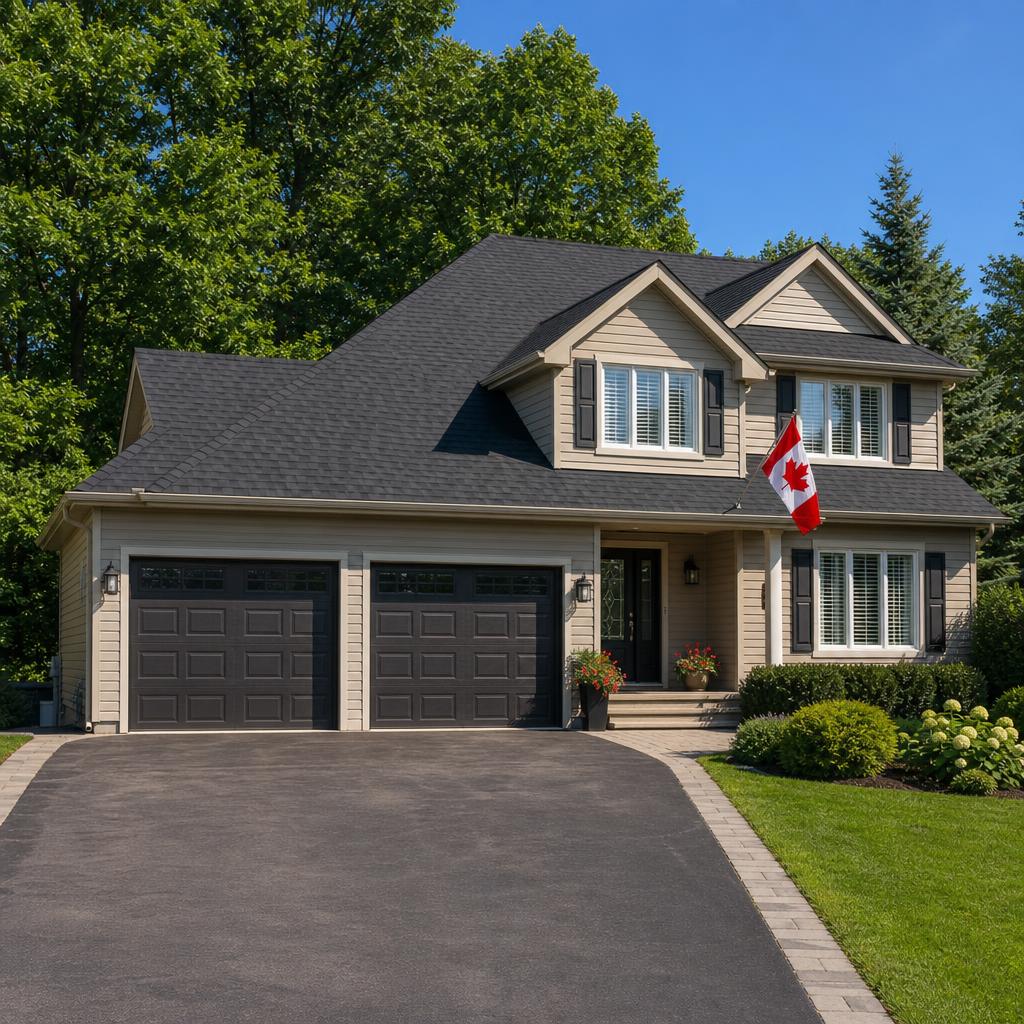
The newer Grimsby subdivisions — particularly those on the bench lands developed in the 2000s, 2010s, and 2020s — present a different set of concerns. Larger two-storey homes with steep pitches and substantial roof areas need 6-inch eavestroughs to handle the volume of water the roofline can generate in a heavy Grimsby storm. Ridge ventilation on these homes is often the original builder-grade product; upgrading it at the time of shingle replacement meaningfully extends the new roof's life.
What to look for when hiring a Grimsby roofing contractor
- A verifiable local presence — a fixed address, Google reviews from Grimsby or West Niagara homeowners, and a track record that outlasts a single storm season
- WSIB clearance certificate and commercial liability insurance — ask for the certificate directly, not just a verbal confirmation
- A full itemized written quote before any work starts, with shingles, underlayment, ice-and-water shield coverage, labour, disposal, and warranty listed separately
- Their own crew doing the installation — subcontracting is common in fast-growing markets; if work is being subcontracted, understand who is responsible for warranty claims
- Specific experience with escarpment-adjacent properties — wind-load and drainage considerations that matter in Grimsby aren't the same as in Mississauga
- A clear protocol for decking replacement — in any home over 20 years, some soft or damaged decking is likely; you want a firm per-sheet price before the crew arrives, not a surprise bill mid-project
Repair or replace for your Grimsby home
For newer homes in Grimsby's subdivisions — roofs installed in the last 10–15 years — isolated repairs usually make sense. For the older lakeshore stock, the calculus is often different: three-tab shingles from the 1990s that are showing widespread failure are rarely worth more repair investment. The honest test is whether a repair addresses the real problem or just delays the replacement by one or two winters.
We serve Grimsby homeowners across both the lakeshore and the bench lands — free estimates, written quotes, and [OWNER TO CONFIRM: crew and subcontracting arrangements] since 1995.